

Middle School Study Skills: Boost Focus, Organization, and Confidence
Effective middle school study skills are the foundational tools that help students manage the academic whirlwind, stay on top of their work, and feel confident in their own abilities. This isn't just about getting good grades. It's about learning how to learn—something that will serve them long after they’ve forgotten the formula for the area of a circle.
By mastering things like time management, organization, and smarter study routines, students don't just survive middle school; they learn how to thrive.
Why Middle School Study Skills Are a Game-Changer

The jump from elementary to middle school is a huge deal. One day your child has a single teacher and a cubby, and the next, they're juggling multiple teachers, a locker combination, more complex homework, and a whole new level of expected independence. It’s a lot to handle, and it’s no wonder so many kids feel overwhelmed.
This isn't just a feeling; it's a well-documented phenomenon that educators often call the "middle school slump." It’s a period where academic performance can take a nosedive right alongside self-confidence.
The numbers back this up. For instance, recent TIMSS results revealed a 'sharp, steep decline' in U.S. 8th graders' math scores, which plummeted by a staggering 27 points from 2019 alone. This massive drop points to a critical gap: academic demands are accelerating far faster than students' ability to manage them. You can learn more about these recent academic trends to see the bigger picture.
Building a Foundation for Future Success
This is exactly where strong study skills come in. They aren’t just “nice to have”—they're the very tools that empower students to take control of this challenging new world. Think of them as the bridge between knowing the material and being able to actually show what you know.
Without these skills, even the brightest kids can fall through the cracks. A perpetually disorganized backpack leads to a zero on a missing assignment. Poor time management turns a week-long project into a frantic, tear-filled all-nighter. Each of these small stumbles can chip away at a student’s confidence, creating a vicious cycle of stress, avoidance, and more stress.
Strong study habits built during these formative years do more than just improve report cards. They foster resilience, reduce anxiety, and cultivate a sense of ownership over one's own learning journey.
From Homework Battles to Empowered Learning
For parents, this period can feel like an endless cycle of nagging, reminders, and all-out homework battles. But the goal isn't to become your child's micromanager; it's to shift into the role of a coach. By teaching these foundational skills, you equip your child with strategies that build true, lasting competence.
This guide will give you a practical, step-by-step approach to help your middle schooler find their footing. We'll walk through actionable strategies for:
Organization: Creating simple, sustainable systems for both physical and digital "stuff."
Time Management: Learning to beat procrastination and plan ahead without the drama.
Active Study: Moving beyond just re-reading notes to actually making information stick.
Test Preparation: Developing calm, effective routines for big exams.
By focusing on these core areas, you can help your child build a toolkit that will not only get them through middle school but will also be invaluable in high school, college, and whatever comes next. If you're looking for more personalized support, explore our tutoring options at Bright Heart Learning to see how we can help.
Creating an Organized Workspace and Mindset
A messy backpack or a chaotic desktop isn't just clutter. It’s a major source of stress that drains the mental energy your child needs for learning.
Before a middle schooler can organize their thoughts for an essay, they need a system to organize their stuff—both physical and digital. This isn’t about achieving some impossible standard of perfection. It’s about building real, sustainable habits that stick.
This matters now more than ever. The jump to middle school often brings a sharp drop in a student's ability to manage themselves. A massive UVA study of nearly 100,000 students found that self-management skills take a nosedive right around 6th grade. Students reported feeling more distracted and less confident, making this the perfect time to build a strong organizational foundation to fight that slump.
Taming the Physical Chaos
First things first: create a designated, predictable spot for schoolwork. It doesn't need to be a whole room, but it does need to be consistent. This is their "launchpad," stocked with everything they need to get started without a scavenger hunt.
But the real game-changer is conquering the constant flood of papers.
The easiest and most effective strategy I've seen is simple color-coding. Just assign a color to each subject and use it for everything.
Blue: Math binder, math notebook, and a blue folder on the computer for math downloads.
Red: ELA binder, ELA notebook, and a red digital folder for essays.
Green: Science binder, science notebook, and a green digital folder for lab reports.
This is a powerful visual cue system, especially for kids who struggle with executive functions. It drastically cuts down the mental effort needed to find the right materials, which makes the dreaded task of starting homework just a little bit easier.
Your Middle School Organizational Toolkit
Getting the right tools in place is half the battle. Think of this as a starter kit for both physical and digital organization. The goal is to create simple systems that are easy to maintain.
| Tool or System | What It Solves | How to Implement It |
|---|---|---|
| Color-Coded Supplies | "I can't find my math folder!" | Assign one color per subject for binders, notebooks, and folders. Consistency is key. |
| "Turn-In" & "To-Do" Folders | Lost homework, missed assignments. | Use a simple two-pocket folder. Left side is "To-Do" (new papers), right side is "Turn-In" (completed work). |
| Backpack "Reset Zone" | The bottomless pit of a backpack. | Designate a spot by the door where the backpack gets emptied and repacked every single day. No exceptions. |
| Digital File System | A chaotic desktop with untitled docs. | Create a main "School" folder with sub-folders for each subject (and color-code them if you can!). |
| Shared Digital Calendar | "I forgot I had a test!" | Use a tool like Google Calendar to plug in all due dates and tests. Share it with parents for oversight. |
| Whiteboard or Bulletin Board | Forgetting major project deadlines. | Keep a large visual reminder of the week's top 3 priorities in the workspace. |
Setting this up might take an hour one afternoon, but it will save countless hours of stress and searching later on.
The Power of a Weekly Reset
Any system will fall apart without a little maintenance. This is where the "Sunday Reset" comes in.
It's a quick, 15-minute weekly routine to clean out the backpack, file away old papers, and glance at the calendar for the week ahead. This tiny habit prevents small messes from turning into overwhelming crises.
The goal of organization isn't to have a perfectly tidy desk at all times. It's to create a system that reduces friction, saves mental energy, and empowers your child to feel in control of their responsibilities.
Organizing the Mind with Digital Tools
Mental clutter is just as draining as physical clutter. The constant swirl of due dates, project steps, and test schedules is a huge source of anxiety for middle schoolers.
The trick is to get all of that information out of their head and into a reliable system they can trust.
A simple planner or a shared digital tool like Google Calendar works wonders here. During that Sunday Reset, take five minutes to plug in all the known assignments and tests for the coming week. This simple act creates a clear roadmap, turning a vague cloud of "stuff to do" into a manageable plan.
For more ideas, you can explore our five tips to keep your student organized. By building these habits now, you’re helping them develop the crucial executive function skills that support them long after middle school.
Practical Time Management to Overcome Procrastination
Telling a middle schooler to "manage their time better" is like handing them a box of car parts and expecting them to build an engine. It’s an abstract concept, and honestly, it’s overwhelming for a developing brain. What they need are concrete, practical strategies that turn that vague idea into something they can actually do.
Many parents see procrastination and immediately think their child is being lazy. But more often than not, it's a self-protection mechanism kicking in. When a middle schooler looks at a massive science project, the sheer size of it can trigger real anxiety. Their brain screams "I don't even know where to start!" and the natural response is avoidance. Firing up a video game feels a whole lot safer and more manageable than tackling a project they secretly fear they can't finish.
Breaking Down Overwhelm with Time Blocking
One of the most effective tools we use to build study skills is time blocking. It’s simple but powerful. You just visually map out the week on a calendar—digital or paper—and assign specific blocks of time for everything. Homework, soccer practice, downtime, even chores get a slot.
For instance, a student might block out 4:00-4:30 PM on Tuesday for "Math Homework" and 7:00-7:45 PM on Thursday to "Study for History Quiz." This simple act does two critical things:
It makes them confront the reality of how much time they actually have (or don't have).
It shrinks huge tasks into manageable chunks with a clear start and end time, making them feel less intimidating.
This isn't about creating a rigid, suffocating schedule. It’s about empowering them to make conscious decisions about where their time goes, which builds a crucial sense of control.
Building Focus with the Pomodoro Technique
Let's be real: most middle schoolers don't have the focus endurance to study for two hours straight. Expecting them to is just setting them up for failure. That's where the Pomodoro Technique comes in. It’s a fantastic way to build their concentration "muscle" over time.
Here's how it works:
Set a timer for 25 minutes. During this "Pomodoro," they work on one single thing. No phone, no distractions.
Take a 5-minute break. They can get up, stretch, grab a snack—anything but work.
Repeat the cycle. After four of these work sprints, they earn a longer break, maybe 15-30 minutes.
This technique completely reframes studying. It's no longer an endless marathon but a series of short, achievable sprints.
The real win with techniques like Pomodoro isn't just getting homework done. It's proving to your child, in 25-minute increments, that they can focus and that starting isn't as scary as they thought.
Defeating Procrastination with Small Wins
For those tasks a student truly dreads, the hardest part is just getting started. The initial friction feels like a brick wall. A great way to break through it is the "2-minute rule." The goal is simple: commit to working on that dreaded task for just two minutes.
That's it. Anyone can do something for two minutes.
What we see time and time again is that this tiny investment is enough to shatter the initial resistance. Once they start, they build momentum and often end up working for much longer. It's a clever trick that short-circuits the anxiety-procrastination loop.
This infographic shows how these ideas can fit into a simple, three-step weekly reset to keep things on track.
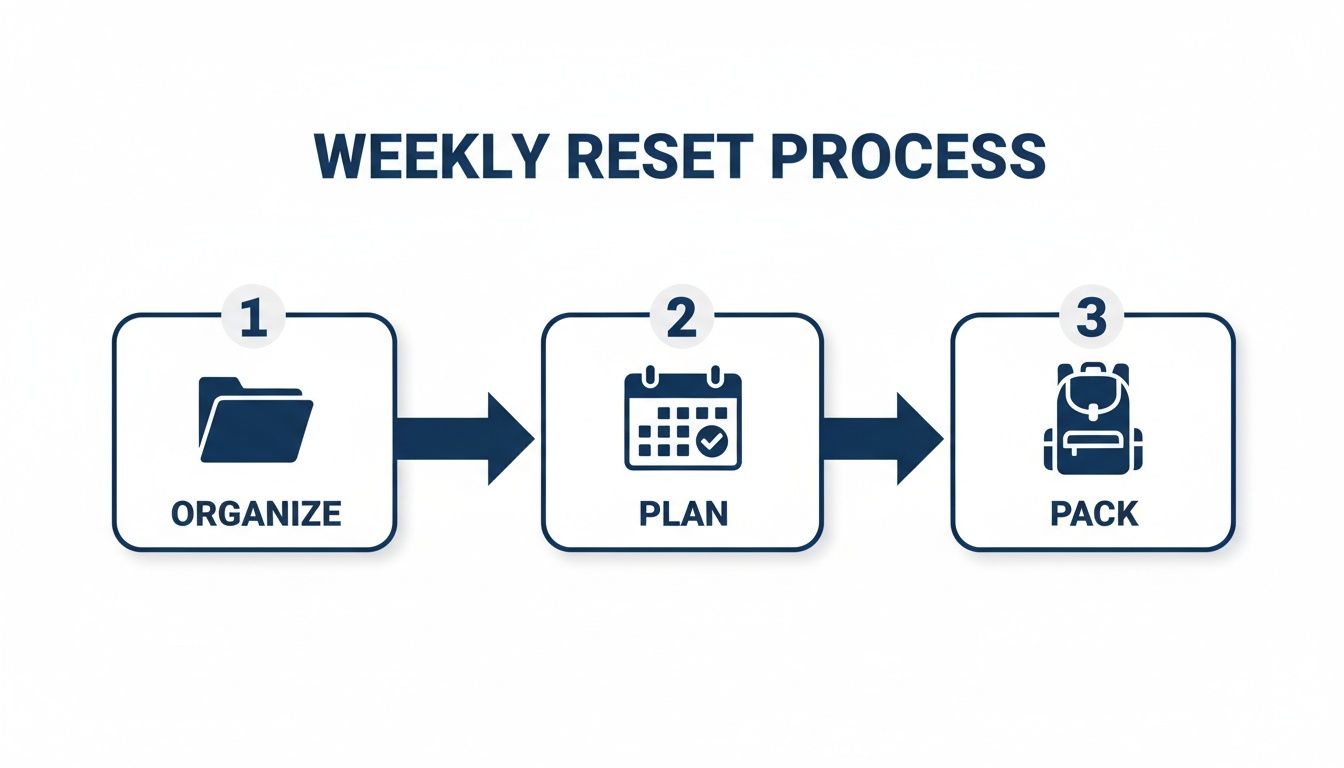
This quick weekly routine—organize, plan, and pack—is the foundation that makes all other time management strategies stick. If you'd like to see more hands-on strategies like these, you can visit our local Poulsbo tutoring center.
Transforming Passive Note-Taking Into Active Learning
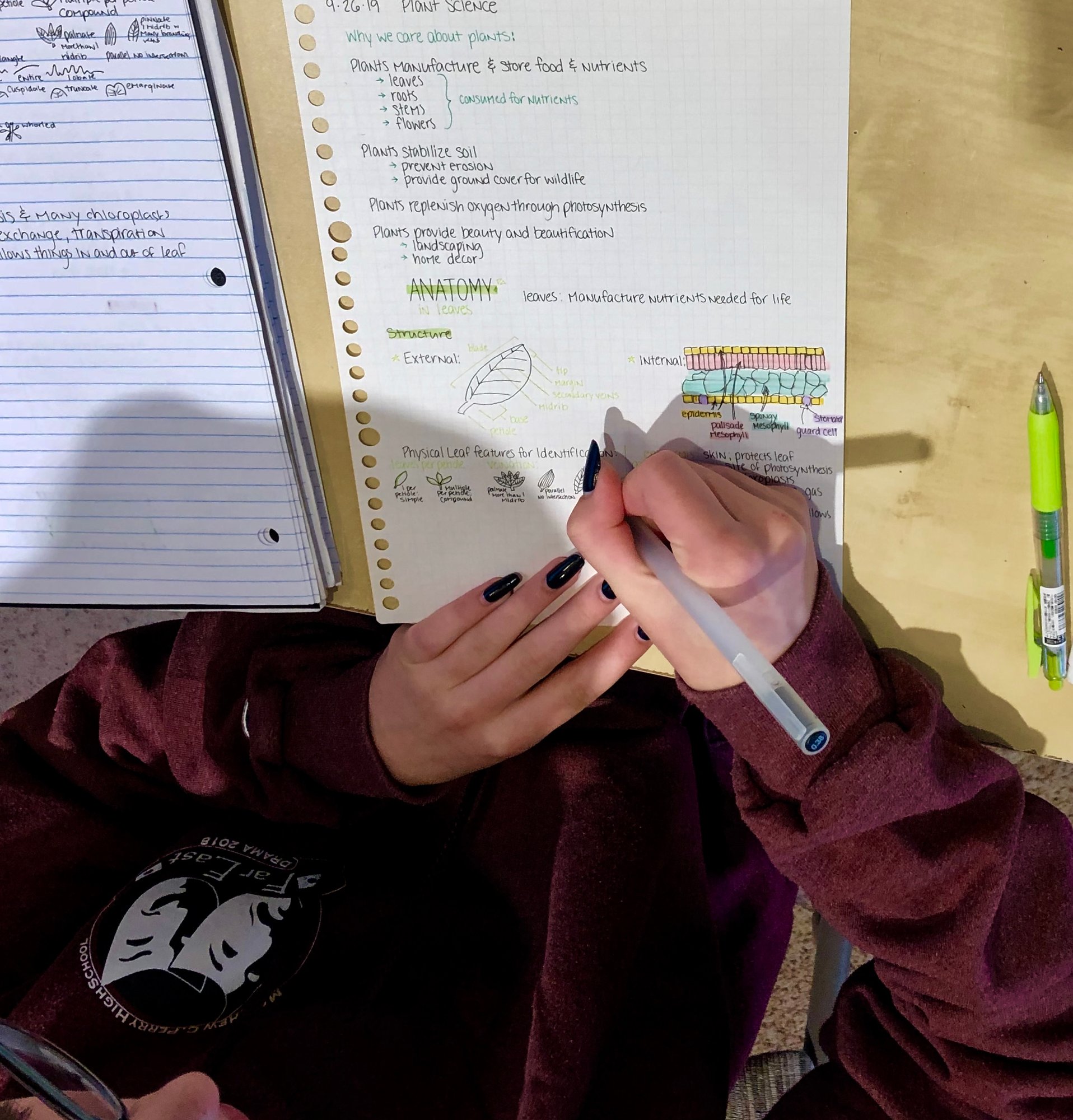
If you ask a middle schooler what "taking notes" means, they'll probably describe a frantic race to write down every single word the teacher says. The result? Pages of cramped, chaotic text that they never look at again.
That's passive listening, not active learning.
The real goal of note-taking is to create a powerful study tool—a personalized summary that helps them process information in the moment and review it efficiently later. It's a fundamental shift from just hearing to actually understanding.
Moving Beyond Simple Transcription
To make this happen, we need to introduce them to effective note-taking methods that build comprehension right into the process. One of the best for this age group is the Cornell System. It’s structured, simple, and turns a blank page into an active learning machine.
Here’s the breakdown:
Divide the Page: Before class, they just draw a large "I" on their paper. This creates a main section on the right, a smaller column on the left (the "cue" column), and a summary box at the bottom.
Take Notes: During the lecture, they take notes in the large, main section on the right, just like they normally would. No pressure to be perfect.
Pull Out Key Ideas: This is the magic step. Shortly after class, they review their notes and pull out main ideas, keywords, or potential test questions, writing them in the left "cue" column.
Summarize: In the bottom section, they write a one- or two-sentence summary of the entire page. What was the main point?
This simple process forces them to interact with the material three separate times, which dramatically increases how much they remember. For more visual learners, sketchnoting—using simple drawings, symbols, and diagrams alongside text—can be an even more powerful way to make connections.
Turning Notes into Knowledge
Great notes are useless if they just sit in a binder. The real learning happens when students use those notes in active study routines that move information from short-term to long-term memory.
A landmark analysis revealed that middle school test scores are a powerful predictor of future success, including high school graduation and college completion rates. Students in the top quartile for standardized test performance in grades 6-8 are 2-3 times more likely to achieve these milestones. It just goes to show how much effective study routines can shape a student's entire academic future.
The most effective study methods are not about rereading, highlighting, or staring at a page. They are about forcing your brain to actively retrieve information, which is the mental equivalent of lifting weights to build muscle.
Instead of passively reviewing, encourage your child to try one of these active methods:
The Feynman Technique: Have them "teach" the topic back to you or a younger sibling. If they get stuck or can’t explain a concept simply, that’s exactly where they need to review.
Create a Quiz: Challenge them to turn their notes into a practice quiz. Writing good questions requires a deep understanding of the material.
Brain Dump: Give them a blank piece of paper and have them write down everything they can remember about a topic without looking at their notes. Afterward, they can use their notes to fill in the gaps.
These active middle school study skills are about working smarter, not just harder. They build deeper understanding and lead to much better results on test day. For more ideas on this, check out our guide to metacognitive strategies for learning.
A Strategic Approach to Stress-Free Test Prep
The classic night-before cram session is a recipe for anxiety and forgotten information. That frantic, last-minute review rarely sinks in, leaving students exhausted and defeated before the test even begins.
There’s a much better way. A calm, strategic roadmap for test prep that starts days—not hours—before the exam.
This approach breaks one overwhelming event into a series of smaller, manageable reviews. You're not just studying; you're building durable middle school study skills and replacing panic with genuine confidence.
Design a Simple One-Week Study Plan
Instead of a massive, two-hour cram session the night before, help your child map out a simple one-week plan. The goal is to review material in short, 15-20 minute bursts each day. This method is far more effective for locking information into long-term memory.
Let's say there's a history test on Friday. The plan might look something like this:
Saturday/Sunday: A low-key review of the last two weeks of notes. This is a great time to create flashcards for key terms, dates, and concepts without any pressure.
Monday: Spend 15 minutes running through the first half of the flashcards. That's it.
Tuesday: Another 15 minutes, this time focused on the second half of the flashcards.
Wednesday: Time for a quick "brain dump." Grab a blank piece of paper and have them write down everything they can remember about the topic. It's a fantastic way to see what's sticking.
Thursday: A final, quick review of all the flashcards, paying special attention to any weak spots they noticed during the brain dump.
This technique is often called spaced repetition, and it's backed by science. It gives the brain time to process and store information properly, which a last-minute panic session just can't do.
Tailor Strategies to the Test Format
Not all tests are created equal, so a one-size-fits-all study strategy won't cut it. Teaching your student how to adapt their approach based on the type of test they're facing is a game-changing skill.
For Multiple-Choice Tests: It's all about the process of elimination. Teach them to physically cross out answers they know are wrong. This simple act narrows the field and makes the correct answer stand out.
For Essay Questions: The key here is to anticipate the questions. Help them brainstorm a few potential essay prompts and create simple outlines for each one. Having a pre-built structure ready to go is a massive confidence booster.
For Math or Science Exams: Rereading the textbook isn't enough. The focus has to be on doing. The more they work through practice problems, the more fluent they'll become in the process itself.
The goal isn't just to know the information, but to be able to access and apply it effectively under pressure. Strategic preparation is the best tool for building that confidence.
Managing Test-Day Jitters
Even the most prepared student can feel their stomach drop on test day. Performance anxiety is real, but there are simple tools to manage it.
Teaching your middle schooler some calming breathing techniques can be a lifesaver. A simple "box breathing" exercise—inhale for four counts, hold for four, exhale for four, and hold for four—works wonders to quiet a racing mind during a test or an intense study session.
Another powerful tip is the "brain dump." As soon as the test is handed out, they can take 30 seconds to jot down key formulas, dates, or vocabulary in the margin. This gets the most important info out of their head and onto the paper, freeing up mental bandwidth to tackle the actual questions.
For a deeper dive into managing these feelings, check out our guide on how to reduce test anxiety.
Partnering with Your Middle Schooler for Success
Trying to force new study habits on a middle schooler is a losing battle. This isn't about top-down directives anymore. Your role is shifting from homework police to trusted coach, and that requires a totally different playbook.
This new partnership is built on connection and respect, creating a space where your child actually feels safe asking for help. The goal is to support them without taking over. When you micromanage, you're sending a subtle message: "I don't think you can handle this." That can crush their confidence right when they need it most. Instead, think of yourself as their collaborator in building these crucial middle school study skills.
Adopt a Connection Before Content Mindset
At Bright Heart Learning, our entire philosophy is built on one core idea: “Connection Before Content.” It’s simple, really. Prioritize the relationship before you dive into the academics. When a kid feels seen, heard, and understood, their defenses come down. That’s when they become open to guidance.
A weekly check-in shouldn’t feel like an interrogation about missing assignments. Try framing it as a genuine conversation: "How are things feeling this week? What was a win, and what felt tough?" This simple shift can open the door to real dialogue instead of a series of one-word answers.
This approach changes the entire dynamic. You’re no longer the nagging parent they tune out, but a reliable ally they can turn to when things get messy. That trust is the foundation for everything else.
Celebrate Effort and Know When to Step Back
It’s so easy to get fixated on the final grade, but that can create a ton of pressure and a deep-seated fear of failure. Instead, make a real effort to celebrate the process. Praise their hard work on a brutal history project, their consistency with a new planner, or their guts for asking a teacher for help.
Part of being a supportive coach is also knowing when to let them fail. It’s hard, I know. But letting your child experience the natural consequence of a forgotten assignment can teach a more powerful lesson than a dozen of your reminders ever could. It’s how they learn ownership and resilience.
Finding the Right Level of Support
Every student is different. Some will take these strategies and run with them, while others might need a more structured partnership to get things off the ground.
Our academic coaching programs are designed around these same collaborative principles. We provide personalized support that empowers students without taking away their autonomy. We work with families to build a success plan that strengthens both skills and confidence.
If you feel like that kind of structured, supportive partnership is what your child needs, you can learn more about our coaching programs at Bright Heart Learning or find us in person at 20720 Bond Rd NE, Suite 101, Poulsbo, WA 98370.
Burning Questions About Middle School Study Skills
When you're navigating the middle school years, a lot of questions come up for parents and kids alike. Building solid study skills is a process, and hitting a few bumps in the road is totally normal. Here are some of the most common challenges we see and how to handle them.
"How Can I Help My Unmotivated Middle Schooler?"
This is a tough one. The truth is, genuine motivation almost never comes from nagging or pressure. It usually sprouts from two key things: feeling like you can do it, and feeling like you have some say in the matter.
Try to find ways to connect what they’re learning to things they actually care about. Maybe it's digging into the history behind their favorite video game or figuring out the physics of a killer skateboard trick. When you check in on their work, make a big deal about their effort and persistence, not just the grade they got on the quiz. Praising how they stuck with a tricky math problem builds the kind of resilience that grades can't measure.
Another great trick? Break down those big, overwhelming projects into tiny, ridiculously easy first steps. It makes getting started feel a whole lot less intimidating.
"What Are the First Steps for a Student with ADHD?"
For a student with ADHD, the name of the game is making internal structure visible and tangible. You can't just tell them to focus; you have to give them the tools that make focus possible.
Start with these foundational habits:
Create one designated study zone. This spot needs to be predictable and as boring (distraction-free!) as possible.
Use a visual timer. Tools like the Time Timer make the abstract idea of "45 minutes" concrete and help manage focus sprints.
Make the planner non-negotiable. Using a planner for every single assignment and test has to become a core part of the daily routine, like brushing their teeth.
The key is to master one new habit at a time. Get the backpack-packing-the-night-before routine down cold before you add something new. Trying to do it all at once just leads to overwhelm and makes it less likely any of it will stick.
The real signs of progress often show up in habits and attitude long before they appear on a report card. Are they starting homework with fewer reminders? Do they seem less stressed about upcoming tests? Celebrate these small, consistent behavioral wins.
"How Do We Actually Know if These New Skills Are Working?"
It's tempting to look straight at the report card, but the real proof is in the process. The clearest signs that these new skills are taking hold are the small shifts in their daily habits and mindset.
You’ll see it when they start their homework with fewer reminders from you. You’ll notice their backpack is less of a black hole. You might even see them seem less anxious about a big test coming up. These are the small victories that show the new middle school study skills are truly taking root. Regular, low-key check-ins will help you both see what's working and figure out what might need a new approach.
At Bright Heart Learning, we specialize in finding what sparks a student's interest and building on it. Our academic coaches are experts at creating personalized strategies that reduce frustration and build lasting confidence. Find out more about how we help students thrive by exploring our academic coaching programs.