

A Simple Guide to the Perfect Format for Essay Writing
Staring at a blank page, bogged down by rules you don’t quite understand? You’re not alone.
Most students see essay formatting as a chore—a long list of tedious requirements for margins, fonts, and citations that get in the way of the real writing. But what if we looked at it differently?
Think of your essay format as the blueprint for a house. Without a solid plan, the final structure would be confusing, weak, and maybe even fall apart. In the same way, a good format gives your ideas the framework they need to stand strong, guiding your reader logically from one point to the next.
This isn't just about passing an academic hurdle. It's a powerful tool for making your thoughts clear and your arguments convincing.
A Tool, Not Just a Rule
A consistent format isn't meant to trap you; it's designed to set your ideas free. When you have a structure to rely on, you can:
Organize Your Thoughts: It nudges you to arrange your ideas in a logical flow—introduction, body, conclusion—which makes your argument stronger from the get-go.
Build Credibility: Following established guidelines like MLA or APA shows your teacher you’re serious about your work and pay attention to the details. It’s a sign of respect for the academic conversation you’re joining.
Make it Easy on Your Reader: A clean, predictable layout lets your reader focus on the quality of your ideas, not on trying to figure out a confusing page.
The skills you learn by mastering essay formats reach far beyond the classroom. In a world where the demand for tutoring is exploding—the private tutoring market is expected to hit USD 123.5 billion by 2030—the ability to organize thoughts clearly is more valuable than ever.
This trend is directly linked to writing, where strong formatting helps bridge executive function gaps. In fact, some studies show students who get personalized support see a 25-40% improvement in their writing organization alone. You can learn more about the rising emphasis on educational excellence and why these skills matter.
Ultimately, getting a handle on essay formats isn’t about memorizing rules just for the sake of it. It’s about building a reliable system that cuts down on anxiety and makes the whole writing process feel less overwhelming, especially for students navigating ADHD or other executive function challenges.
Building Your Essay: The Universal Five-Paragraph Structure
Before we get tangled up in the specific rules of MLA or APA, let's zoom out and master the blueprint that holds nearly every academic paper together: the five-paragraph structure.
Think of it as the reliable framework for a house. The introduction is the foundation, the body paragraphs are the sturdy walls, and the conclusion is the roof that ties everything together. This isn't just some random rule your teacher made up; it's a logical system designed to guide your reader through your argument, making sure your ideas are clear, organized, and persuasive. Once you get this down, the writing process becomes a whole lot less intimidating.
Your Roadmap: The Introduction
A strong introduction has to accomplish three things, and it has to do them quickly. First, it needs to grab your reader's attention with a hook—this could be a surprising fact, a thought-provoking question, or a bold statement that makes them want to read on.
Next, it provides just enough context or background to get your reader up to speed on the topic.
Finally, and most critically, it delivers your thesis statement. This is the single, powerful sentence that declares your main argument and gives a sneak peek at the points you’ll use to prove it in the rest of the essay.
The Journey: The Body Paragraphs
This is where you make your case. The three body paragraphs are the heart of your essay, with each one dedicated to a single, distinct point that directly supports your thesis.
A fantastic and easy-to-remember way to build these paragraphs is the P.E.E.L. method:
Point: Kick off the paragraph with a clear topic sentence. This tells the reader exactly what this section is about.
Evidence: Back it up. Provide a specific example, a quote from a source, a statistic, or a piece of data that supports your point.
Explanation: This is the "so what?" part. Don't just drop the evidence and run. Explain how it proves your point and, more importantly, how it connects back to your main thesis.
Link: Wrap it up with a sentence that smoothly transitions to the idea in the next paragraph, keeping the journey seamless for your reader.
Mastering a repeatable structure like P.E.E.L. reduces the mental load of writing. When you have a clear formula, you can direct more energy toward developing your ideas instead of worrying about how to organize them.
For many K-12 students, especially those with ADHD or executive function challenges, this kind of structure is a game-changer. Turning structural anxiety into confidence is where personalized coaching makes a huge difference. Globally, countries like China and South Korea have built exam prep around refining this kind of structured writing. Following this trend, a relational tutoring approach can boost essay performance by 20-30% in focus and retention. You can discover more insights about the academic tutoring market to see how structure builds success.
The diagram below shows how these core components all fit together.
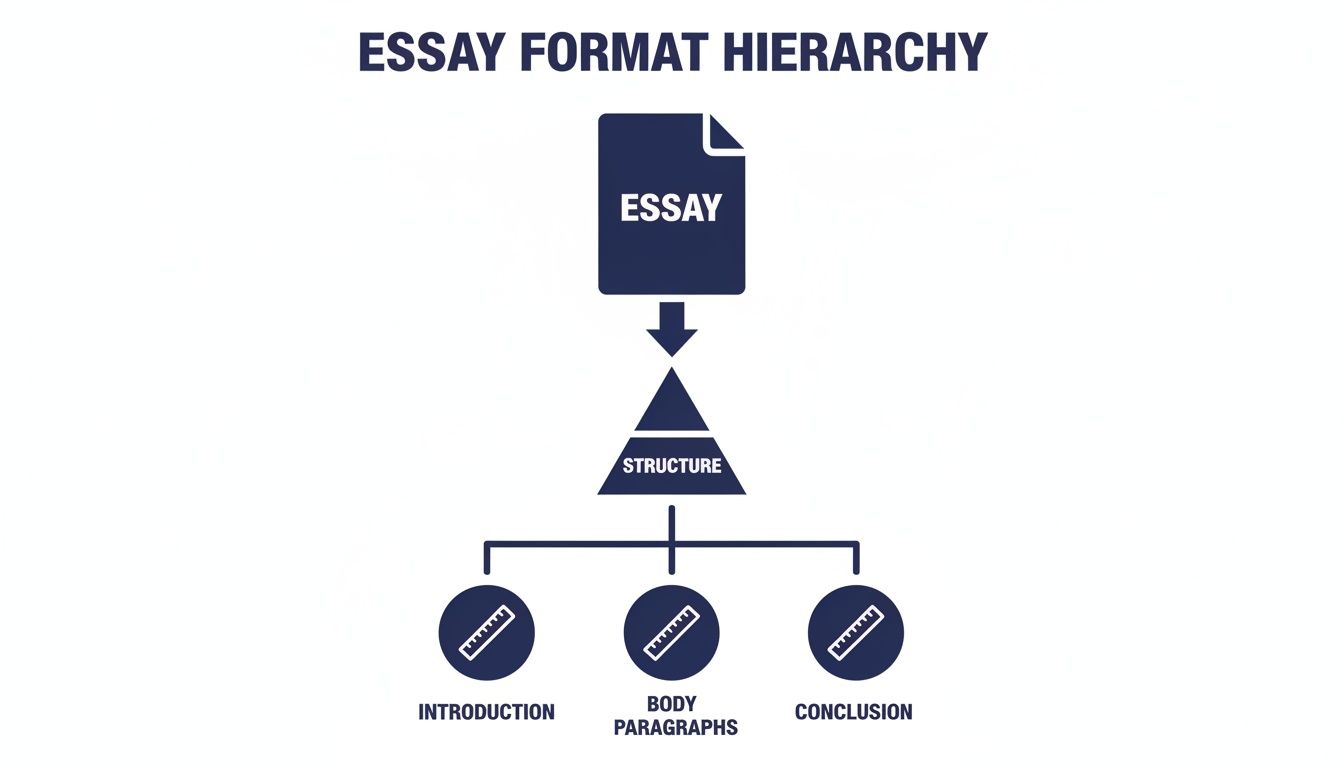
This visual makes it clear: a successful essay is built on both a solid structure and consistent formatting rules.
The Destination: The Conclusion
Your conclusion brings the journey to a satisfying close. Its main job is to wrap things up neatly, so you should never introduce new information or arguments here.
Instead, start by restating your thesis in a fresh way—don't just copy and paste it from the introduction. Then, briefly summarize the key points from your body paragraphs. Finally, leave your reader with a powerful, thought-provoking final statement that underscores why your argument matters.
Choosing Your Style Guide: MLA, APA, and Chicago Explained
Once you get the hang of the universal five-paragraph structure, the next layer to master is the style guide. Think of styles like MLA, APA, and Chicago not as a bunch of picky, random rules, but as different dialects spoken in different academic worlds.
Each one is built to highlight what that particular field values most. Choosing the right one isn't about your personal favorite—it's about speaking the right language for your audience (usually your professor) and the topic you're exploring.
Using the wrong style is like trying to order a coffee in French at a cafe where everyone speaks Spanish. You might eventually get your point across, but it’s going to be confusing and clunky for everyone involved.
The Language of the Humanities: MLA
You'll run into MLA (Modern Language Association) most often in English, philosophy, and foreign language classes. Its biggest focus is on the author. The humanities are all about who created a work and how their unique voice shapes the text.
That’s why MLA citations always put the author's last name right at the beginning of the entry and in the in-text citation (e.g., Smith 42). It puts the creator front and center, giving them credit for their contribution to our ongoing cultural conversation.
The Language of the Sciences: APA
APA (American Psychological Association) format is the go-to for the social sciences—think psychology, education, and sociology—as well as fields like business and nursing. For these disciplines, the single most important piece of information is timeliness.
Research in these areas is constantly evolving, so knowing when a study was published is absolutely critical. This is why APA format places the publication year right after the author's name (e.g., Smith, 2023). It lets readers see at a glance if the information is current.
The Language of History: Chicago
The Chicago Manual of Style (CMOS) is the most flexible of the three, used mostly in history and some of the fine arts. It’s unique because it offers two different systems: a notes-bibliography system (using footnotes or endnotes) and an author-date system.
This flexibility is a historian's dream, allowing them to cite a massive range of sources—from ancient letters to modern websites—with incredible detail. Footnotes are especially handy because they let a writer add extra context or cite several sources at once without cluttering up the main text. It's perfect for weaving together complex historical arguments.
If you're working on bigger projects, a general writing style guide template can be a huge help in keeping everything consistent.
At a glance, the differences might seem tiny—a comma here, a date there. But each style guide is a finely tuned system designed to meet the specific needs of its field. Understanding why these rules exist makes following them a whole lot easier.
To help you see the differences side-by-side, here’s a quick breakdown of the most common features.
Quick Guide to MLA, APA, and Chicago Styles
Sometimes, the best way to understand the differences is to see them laid out plainly. This table compares the key features of the three major formatting styles, focusing on the details that often trip students up.
| Feature | MLA (9th Edition) | APA (7th Edition) | Chicago (17th Edition) |
|---|---|---|---|
| Primary Field | Humanities (English, Arts) | Social Sciences, Business | History, Fine Arts |
| In-Text Citation | (Author Last Name Page #) | (Author Last Name, Year) | Footnote/Endnote number |
| Title of Works Cited | Works Cited | References | Bibliography |
| Header | Last Name and Page # | Page Number only | Page Number only |
Each style has its own logic, tailored to what its primary users need to communicate. Once you get the hang of one, the others become much simpler to learn.
Setting Up Your Document For Success
Before you even think about typing that killer opening line, let’s talk about setting up your document. I know, I know—it feels like the boring part. But trust me, getting this right from the start saves a massive headache later.
Think of it like setting up your workspace before a big project. A clean, properly formatted document lets your teacher focus on your ideas, not on weird fonts or funky margins. It’s the first impression you make, and it signals that you’re taking the assignment seriously.
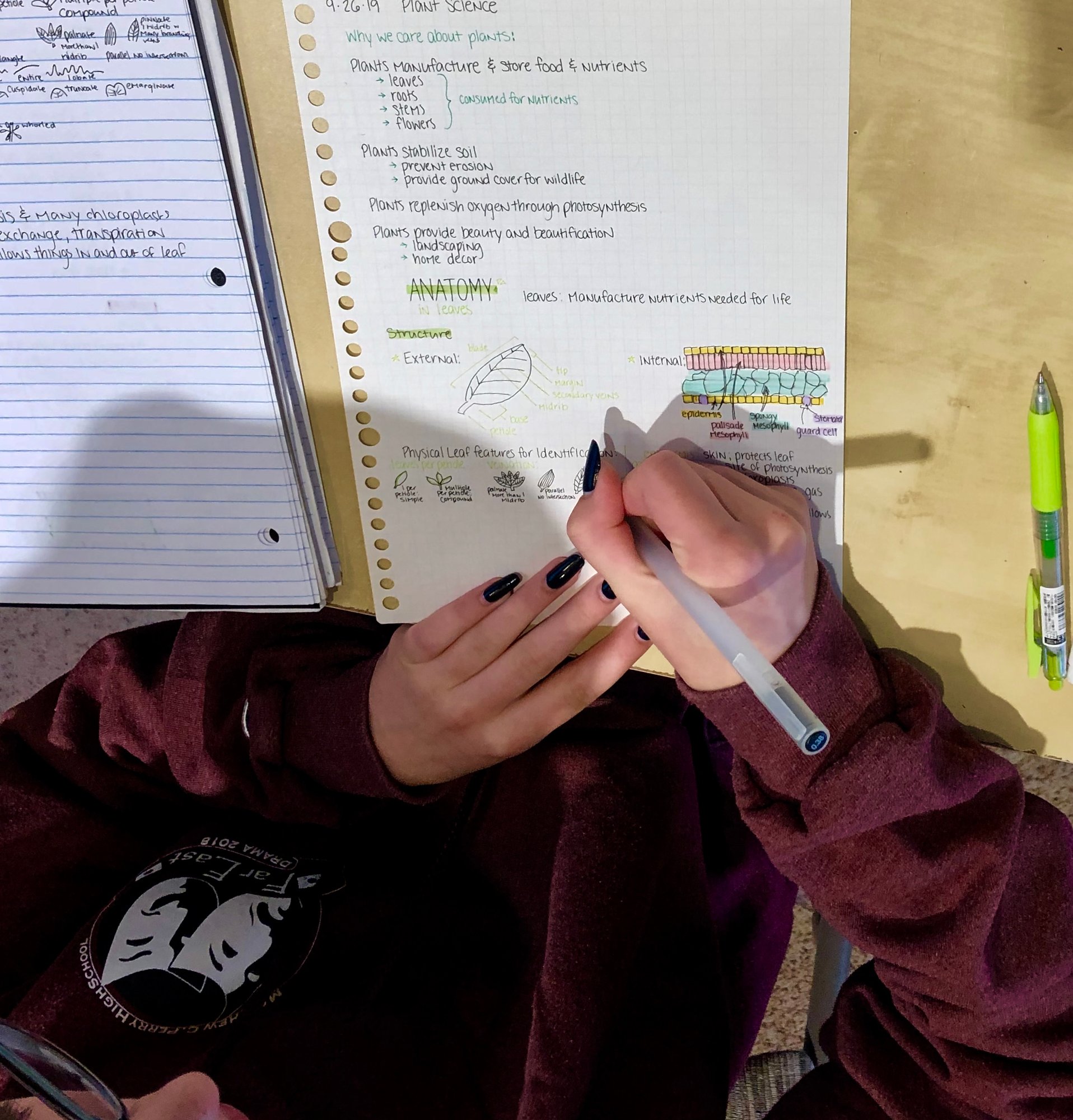
These technical rules aren’t just busywork. Proper spacing makes your text easier for your teacher to read and leave comments on. A standard font keeps your work looking professional and clean. Believe it or not, these universal manuscript formatting guidelines are just as important for a college essay as they are for a novel.
The Four Core Formatting Steps
Whether you’re a Microsoft Word person or a Google Docs fan, the basic setup is pretty much the same across the board. Nail these four things from the get-go, and you’ll have a solid foundation to build on.
Set Your Margins to One Inch: This is the gold standard for academic papers. It frames your text with plenty of white space, which keeps the page from feeling cluttered and gives your instructor room to write notes.
Choose a Standard, Readable Font: While it’s tempting to get creative, stick to the classics. Times New Roman 12pt is the old standby, but other simple, easy-to-read fonts like Garamond or Georgia usually work just as well. Just stay far away from anything that looks like handwriting or comic book lettering.
Apply Double-Spacing Everywhere: Your entire document—from the heading at the top to the very last line on your Works Cited page—should be double-spaced. It’s a simple click that instantly makes your paper more readable and leaves space for feedback.
Create Your Header: Most styles, like MLA, require a header in the top-right corner with your last name and the page number. Make sure to use the automatic page numbering feature in your word processor so it updates on every page without you having to touch it.
Getting these small technical details right from the beginning is a powerful way to reduce last-minute stress. When your document is set up correctly, you free up mental energy to focus on what truly matters: your ideas and your writing.
From Technical Steps to Confident Writing
For students working toward a GED or navigating the Running Start program, mastering the technical format for an essay is a huge step toward academic independence. But the anxiety of getting every little detail “right” can feel overwhelming.
This is where personalized coaching with nervous-system-aware methods can be a game-changer, often improving memory and retention by 15-25%. The online tutoring market, now valued at over USD 10.42 billion, offers flexible tools that can make these technical drills feel way less stressful. If you’re juggling multiple assignments, check out our guide on 5 tips to keep your student organized.
Brain-Friendly Formatting Tips for Executive Function
For a lot of students, especially those with ADHD, anxiety, or other executive function challenges, the idea of writing an entire essay can feel completely paralyzing. Just staring at that blank page is enough to shut your brain down.
The secret isn’t to just "try harder." It's to break the whole process down into small, manageable wins. This is how you build momentum and turn that feeling of dread into a real sense of accomplishment.

The standard format for essay writing gives us a great roadmap, but we can add some layers to it that make it work with your brain, not against it. It’s less about finding a magic bullet and more about discovering strategies that lower the stress and make the work feel doable.
Break Down the Task
Before you even think about writing a complete sentence, your first job is to dismantle the project into tiny, bite-sized pieces. This strategy is the ultimate weapon against the overwhelm that so often leads to procrastination.
When you only have to focus on one small thing at a time, you start creating a chain of progress that actually fuels your motivation to keep going.
Here are a few powerful techniques to get you started:
The Pomodoro Method: This isn't complicated. It's a simple time management trick where you work in focused, 25-minute bursts, separated by short breaks. Knowing you only have to concentrate for a little while makes it so much easier to just begin.
Create a ‘Brain Dump’ Outline: Forget what you know about formal outlines for a second. Just open a document and spill everything onto the page. Every idea, random fact, or question you have about your topic—get it out in any order. This messy first step clears the clutter from your head so you can organize it all later.
Color-Code Your Paragraphs: As you start writing, give each paragraph a different color based on its job. For example, green for the introduction, blue for your first main point, and orange for the evidence supporting it. This visual map helps you see the structure of your argument and quickly spot if anything is missing.
The goal isn't perfection; it's progress. Celebrating the small victories—like finishing one Pomodoro session or getting a single paragraph done—can reframe the entire experience. It turns something that causes anxiety into a series of achievable challenges you can actually conquer.
Let Technology Help You
Proofreading is another classic hurdle where executive function challenges can throw up a roadblock. It’s exhausting to read your own writing over and over, and your brain gets really good at skipping right over mistakes it already expects to see.
This is where text-to-speech tools can be a total game-changer.
When your computer reads your essay out loud, you hear the errors—like awkward phrasing or missing words—that your eyes completely miss. It shifts the task from a visual one to an auditory one, which engages a whole different part of your brain. To explore this idea further, you can learn more about what executive function support looks like in our in-depth guide.
Turn Frustration Into Confidence with Expert Support
Getting the hang of essay formatting isn't just about the grade—it's about building real, lasting academic confidence. We’ve walked through the universal essay structure, broken down the different citation styles, and shared some brain-friendly ways to make the whole process feel less overwhelming. You’ve got a great foundation now.
But you don’t have to figure out the rest on your own.
Sometimes, the biggest leaps forward happen when you have someone in your corner, offering guidance that actually clicks with the way you learn.
Personalized Support Makes All the Difference
At Bright Heart Learning, our academic coaches and tutors are experts in providing personalized, nervous-system-aware support. We get that challenges with focus, organization, or anxiety are very real obstacles, and we help students build practical strategies to move past them. Our goal isn't just to explain the rules, but to help you build the skills to use them confidently.
Turning that feeling of frustration into a sense of accomplishment is at the heart of everything we do. By focusing on connection before content, we create a supportive space where students feel safe enough to learn, make mistakes, and truly grow.
If you’re ready to change how you tackle your assignments, we’re here to help. To learn more, check out our resources on effective writing tutoring strategies and support.
Our one-on-one executive function coaching and tutoring sessions are designed to help you succeed on your own terms. Let us help you hit your academic goals with a lot less stress and a whole lot more confidence. You can find our dedicated team ready to support you at 123 Learning Lane, Seattle, WA 98101.
Common Questions About Essay Formatting
Even when you feel like you have a handle on the rules, little questions always seem to pop up right when you’re trying to finish an essay. Getting a quick, clear answer can be the difference between a simple fix and a mistake that costs you points.
Think of this section as your go-to guide for those last-minute "am I doing this right?" moments. We’ve rounded up the most common questions we hear from students, so you can move forward with confidence.
What Is the Most Common Format for an Essay in High School?
For most high school classes and a lot of introductory college courses in the humanities, MLA (Modern Language Association) format is the gold standard.
Its design is refreshingly straightforward, making it perfect for citing the kinds of sources you’ll use most often—books, articles, and websites. Teachers prefer it because it puts the focus right where it should be: on the author, which lines up perfectly with the goals of literary and cultural analysis.
Can I Use an Online Citation Generator?
Yes, absolutely! Citation generators can be a huge time-saver and a great starting point. But—and this is a big but—you must always double-check their output for accuracy.
These tools aren’t foolproof. They often make small but noticeable mistakes in punctuation, capitalization, or other formatting details. Use them to get the basic structure down, but then proofread every single entry against a reliable style guide before you call it done.
The single biggest mistake students make is trusting a citation generator completely. Your teacher will spot the inconsistencies, and it’s your name on the paper. Taking a few extra minutes to verify everything shows you care about the details and respect the academic process.
How Do I Cite a Source with No Author?
It happens more often than you’d think. When a source doesn’t have a credited author, your citation simply starts with the title of the work instead.
For your in-text citation, you’ll use a shortened version of the title in quotation marks, followed by the page number if there is one (e.g., "The Future of Writing" 42). Then, on your Works Cited page, that entry will be alphabetized by its title, not by an author's last name.
What Is the Biggest Formatting Mistake to Avoid?
Without a doubt, the most common—and most avoidable—mistake is an incorrectly formatted Works Cited or References page.
This covers everything from inconsistent spacing and missing publication dates to entries not being alphabetized correctly. This page is the last thing your instructor sees, so always give it one final, careful proofread. A clean, accurate bibliography leaves a great final impression.
At Bright Heart Learning, we get that mastering the little details of essay formatting is a huge step toward academic confidence. Our expert tutors offer personalized support to help you navigate all the rules without the stress. Explore our tutoring programs and see how we can help you turn frustration into real achievement.